How to Know When It Is Time to Say Goodbye
There is rarely one clear sign. There are quieter ones, and there is a way to weigh them honestly, so the choice you make is one you can live with afterward.
Almost every family asks us the same question, and almost always late at night. How will I know when it is time? The honest answer is that very few people ever feel certain. What you can do is look at the same things a veterinarian looks at, write them down, and let the pattern tell you what a single hard day cannot.
We are not veterinarians, and nothing here replaces the one who knows your pet. What follows is what we have learned from walking beside Fort Worth families through this decision, over and over, for four generations.
Waiting for a Clear Sign Rarely Works
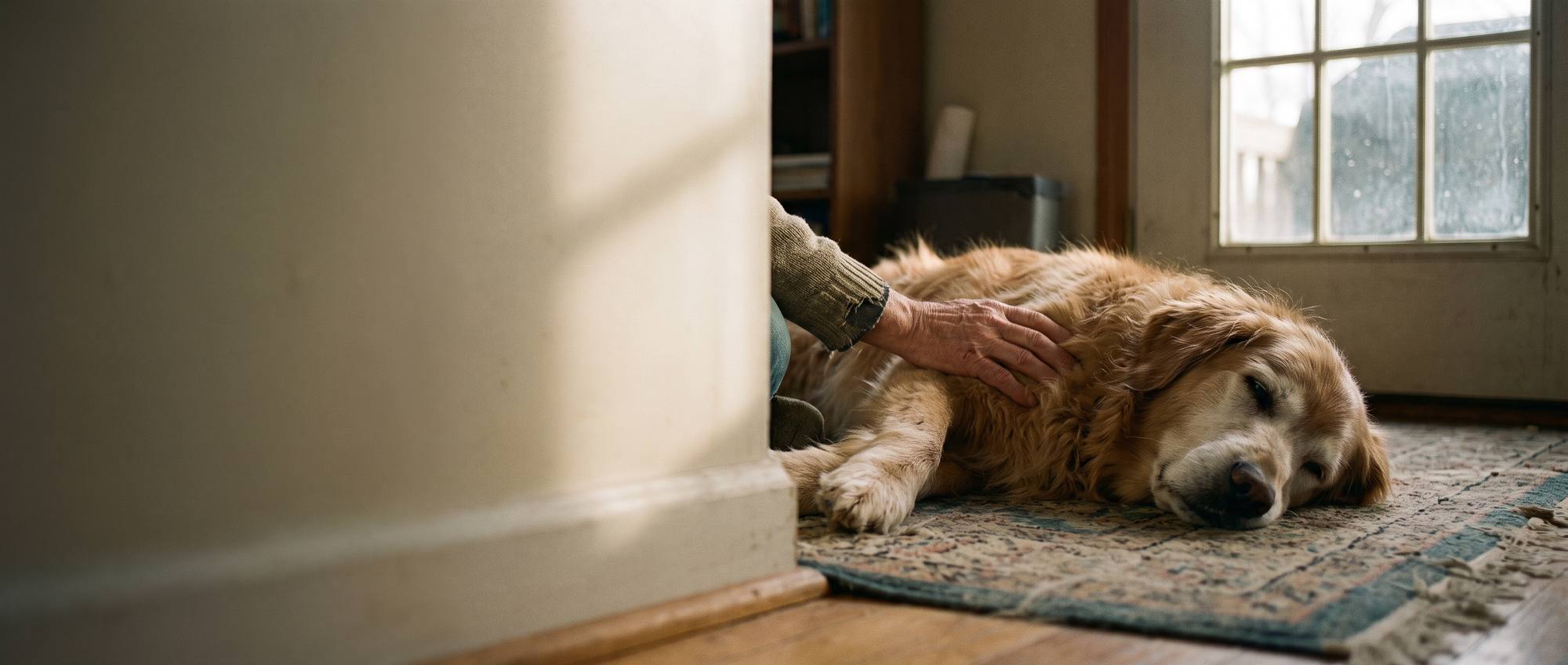
Many people expect a moment that settles it. A collapse, a refusal to eat, a look in the eyes. Sometimes that moment comes. Far more often it does not, because pets are built to hide how bad they feel. A dog will wag through real pain because you walked into the room. A cat will go quiet and still, which is easy to read as resting.
So the signs are usually smaller than people expect. A cat who has stopped grooming and now sleeps under the bed is saying something. A dog who no longer meets you at the door, or who cannot settle at night, is saying something too.
The Things Veterinarians Actually Weigh
Veterinary teams often use a written quality of life scale, scoring the same handful of areas from day to day. You can look at the same list at home.
- Pain. Is your pet comfortable most of the day? Is the medication still working as well as it did a month ago?
- Eating and drinking. Is your pet eating enough to hold weight, without being coaxed, hand fed, or tricked into it?
- Staying clean. Can your pet keep themselves clean and get to the right spot in time, or are there accidents and sores?
- Getting around. Can your pet stand up, reach water, and move without help or without falling?
- Interest in life. Does your pet still want your company, the sunny spot, a favorite toy, the sound of the leash?
- Good days against bad days. Over a week, which kind are there more of?
No single answer decides anything. Taken together over a few weeks, they usually do.
Keep a Simple Good Day, Bad Day Record
This is the most useful thing we can suggest, and it costs nothing. Put a paper calendar somewhere private. Every evening, mark the day G or B, and add one short line about why.
Do this for two or three weeks. Memory is unreliable when you are frightened and tired, and one good afternoon can wipe out the memory of five hard days. The calendar does not do that. When the bad days start to outnumber the good ones, and the good days are no longer really that good, you will have your answer in your own handwriting.
It also gives you something concrete to bring to your veterinarian, instead of trying to describe a month of worry in a ten minute appointment.

Talk to Your Veterinarian Sooner Than Feels Necessary
Most families wait too long to start this conversation, because starting it feels like giving up. It is not. It is how you find out what the next few weeks are likely to hold.
Useful things to ask, in plain words:
- If this were your own pet, what would you be thinking about right now?
- What does the next month probably look like?
- Is there anything left that would meaningfully improve how my pet feels?
- What would a bad ending look like, so I can try to avoid it?
That last question matters more than it sounds. Many families who wait describe the same thing afterward: a crisis at two in the morning, a frantic drive, a goodbye in a bright room full of strangers. Knowing what to avoid helps you choose a gentler path while you still have the choice.
What to Decide Before the Day
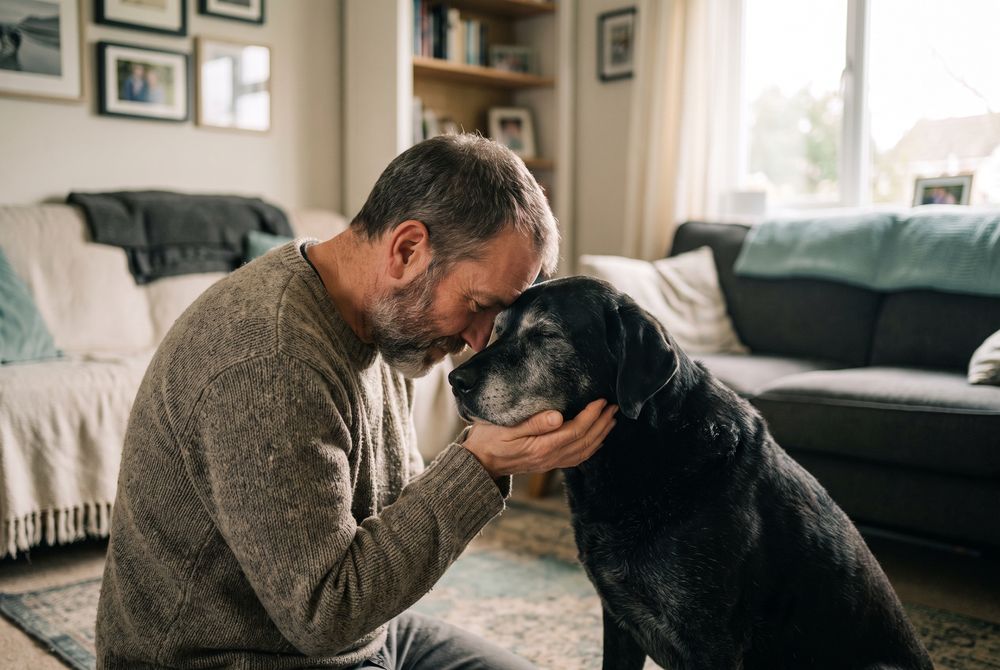
Deciding these things ahead of time means nobody has to make phone calls through tears.
- Who will be there. Children who are old enough to understand should be allowed to choose for themselves. Our guide on talking to children about losing a pet may help with that conversation.
- Whether your other pets see the body. Many families find that a quiet moment afterward helps the animals left behind, who otherwise only know that a friend went out and never came back.
- Where it happens. A veterinary clinic, or your own home. Both are good choices, and the right one depends on your pet and on you.
- What happens afterward. Burial or cremation, and which kind. This is the piece families most often leave until the last hour, and it is the easiest one to settle early.
Saying Goodbye at Home
Some pets are frightened by the clinic, and some are simply too sore to travel. In-home euthanasia lets your pet stay on their own bed, in their own house, with the people they know. There is no waiting room and no car ride at the end.
If that sounds right for your family, you can read about in-home pet euthanasia and about pet euthanasia in Fort Worth before you decide anything. If you would rather use your own veterinarian, that is perfectly fine, and we will still be here for whatever comes next.
Arranging ahead of time is allowed
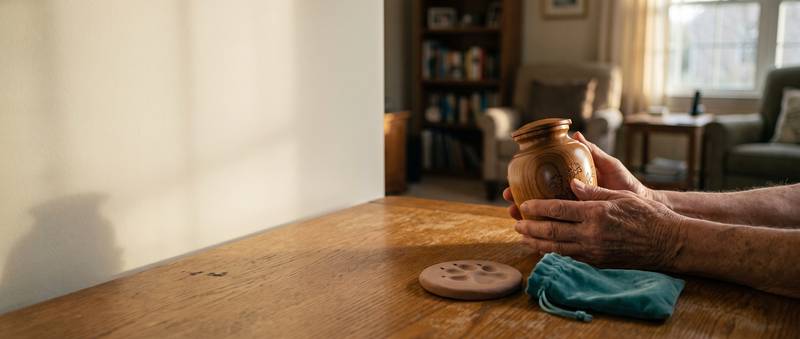
You do not have to wait until the day itself. Many families call us a week or two beforehand, choose a service and an urn, and put the arrangement in place quietly. Semi-private cremation starts at $170 and private cremation starts at $220, with every figure listed on our pricing page. You can also arrange everything online whenever you are ready.
What Happens on the Day
Knowing the shape of it takes away some of the fear. In most cases the veterinarian gives a sedative first, so your pet drifts into a deep sleep in your arms without any distress. Once your pet is asleep, a second injection stops the heart, usually within a minute. Pets often sigh, twitch, or keep their eyes open, and none of that means they felt anything.
Bring the blanket they love. Say what you want to say. Afterward, take as long as you need in the room. There is no schedule you are holding up.
Afterward, Be Gentle With Yourself
Nearly everyone second-guesses the date. Too soon, too late, one more week. Veterinarians have a saying about this, and it has held up for a long time: better a week too early than a day too late. A week early costs you time you wanted. A day late is paid for by your pet.
If the grief afterward surprises you with its size, that is normal, and it is not out of proportion. Our guide to grieving a pet walks through what helps.
Choosing the day is the last act of care you get to give. It is a hard gift, and it is still a gift.
When the Time Comes, Call Us
Our family runs its own crematory in Fort Worth, and we answer the phone at every hour. Your pet stays in our care from the moment we collect them until they come home to you, usually in about four days. Nothing gets shipped to an outside company.
Call (817) 862-7000 whenever you are ready, day or night, or arrange a cremation online from your kitchen table. You do not have to do this part alone.
More From Our Blog
How Pet Cremation Works, Step by Step
The whole process in plain words, from the first phone call to the day your pet comes home.
Read the Guide
What To Know When a Pet Passes Away
The first hours and days after your pet passes, and the choices waiting in front of you.
Read the GuideWe Are Here for You, Day or Night
Serving Fort Worth, Arlington, and families all across Tarrant County with warmth and respect, 24 hours a day.
Family Owned · Available 24/7 · Prices Posted Online